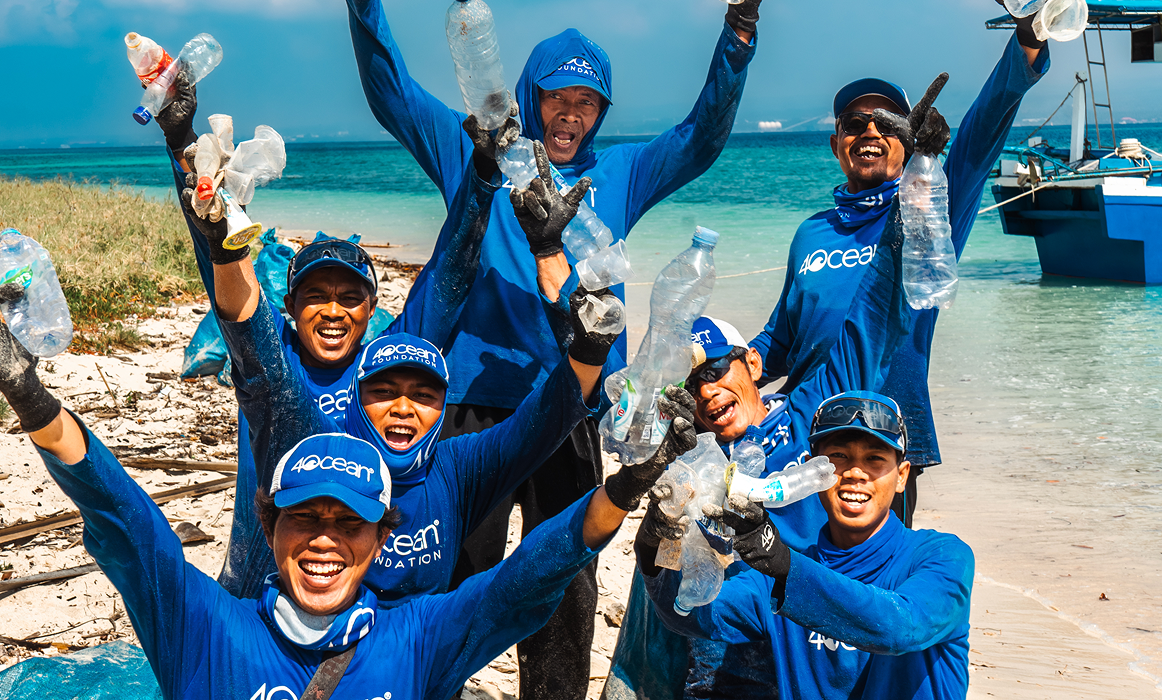
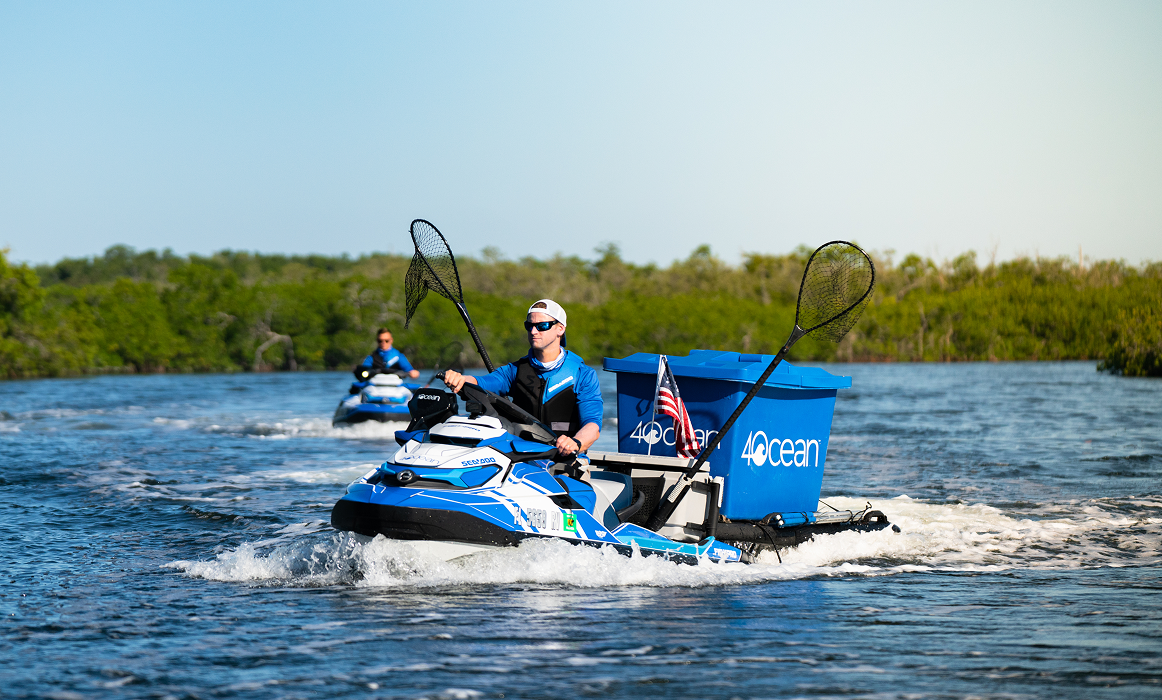
No cleanup program alone reverses a crisis of this scale
What changes the trajectory is a model that proves impact, shifts behavior, connects to policy, and helps build the upstream partnerships needed to redesign the systems that produce plastic in the first place.
The problem we're working against
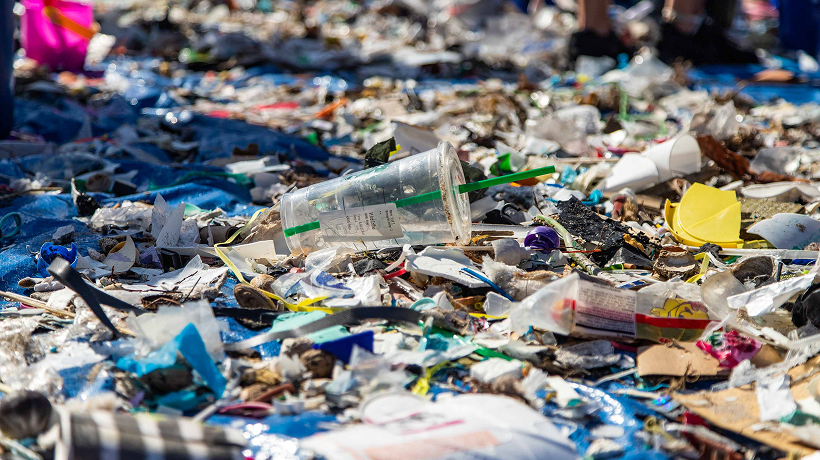
Plastic pollution is accelerating, not decelerating.
The scale of what we're working against is important to name honestly. Plastic pollution is not a problem on its way to being solved — it is a problem that is getting worse, faster.
130M
metric tons entering the environment annually, as of 2025
280M
projected by 2040 under a business-as-usual scenario
More than double. An increase of 2.15× across the window. No cleanup program at any scale outruns that flood alone.
Source: Pew Charitable Trusts, Breaking the Plastic Wave (2025)

Plastic left in the ocean does not simply sit there — it breaks down into microplastics, fragments small enough to enter water, air, and the food chain. Peer-reviewed research has found microplastics in human blood, lungs, and placenta.
Source: Journal of Environmental Management, 2025
Every piece of plastic we remove is one less fragment that can ever become microplastic.
Our honest starting point
Our commitment is to transparency, not promotion.
Our first year removal of roughly 6.3 million pounds is approximately 0.002% of the plastic entering the environment annually. We name that figure not to minimize the work, but because donors and partners deserve to understand the scale of what we are collectively up against — and what it will take to make a meaningful dent.
-
6.3M
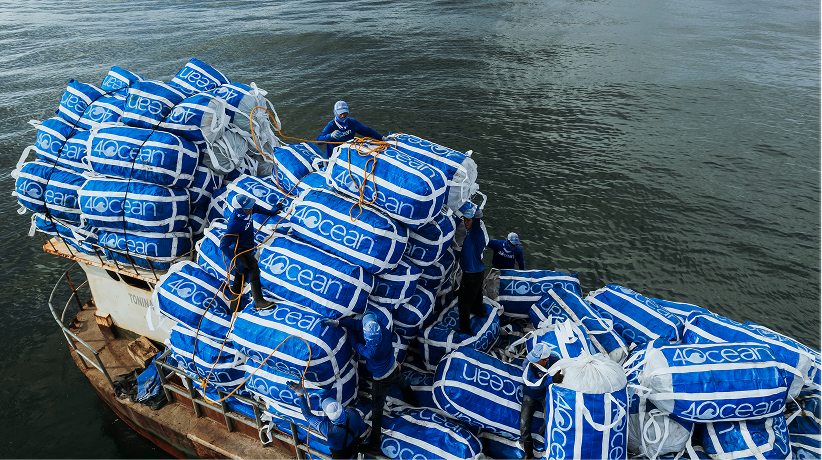
pounds removed in our first year of philanthropic operations
-
-
0.002%
pounds removed in our first year of philanthropic operations
-
-
200
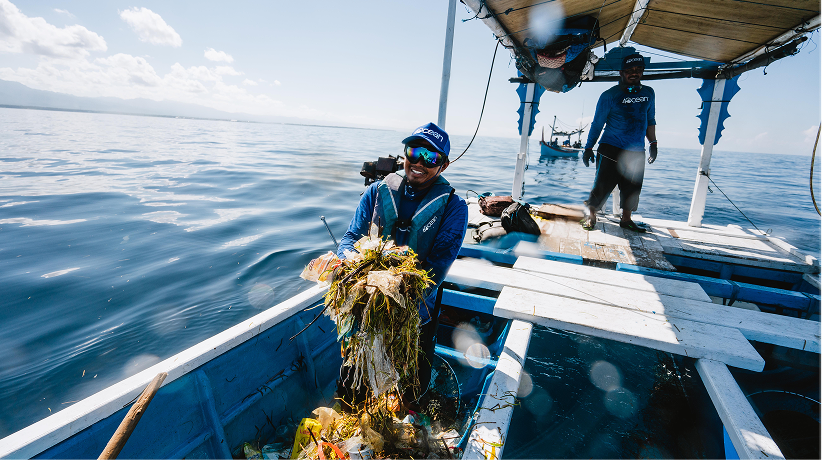
local captains and crew moved from subsistencefishing into well-paid ocean stewardship
-
The working theory of change
Four pillars. Two we own. Two we complement.
Independent research backs this exact architecture — direct cleanup and materials management as our downstream proof, policy and systems change as the upstream complement we equip others to lead.
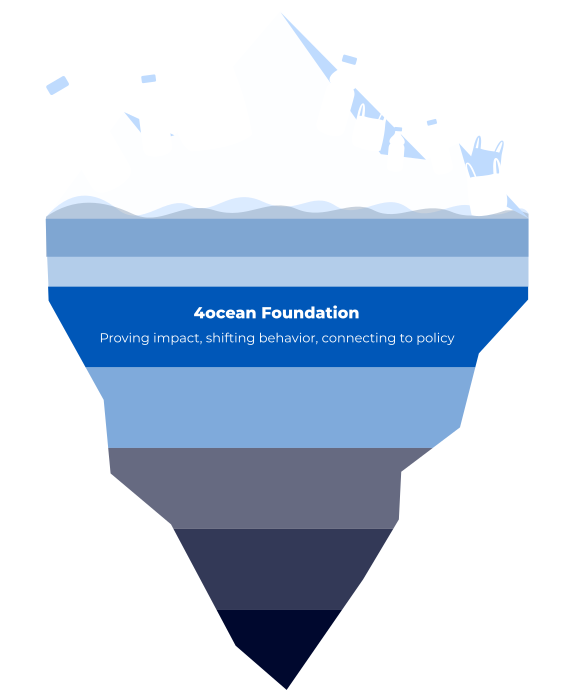
Plastic pollution accelerating toward 280M metric tons by 2040
4ocean Foundation
Proving impact, shifting behavior, connecting to policy
-
Global Cleanups & Materials Management
Boats, Booms, and Beaches. Verified monthly. GPS-logged to the ecosystem worked. Goal: BDO independently auditing monthly and annual numbers.
-
Education & Behavior Change
Cleanup content powers campaigns with Mission Blue, Coral Triangle Center, Team Brady, and our Giving Season and Rainy Season programs.
-
Policy & Advocacy
We equip Coral Triangle Center, Mission Blue, andIndonesian elected officials with verified data and imagery. They hold the policy relationships.
-
Upstream Systems Change
Partnerships with organizations building toward systemic redesign of the systems that produce plastic in the first place.
- Plastic removed from the ocean, verified and traceable
- Livelihoods transformed for coastal communities
- Marine ecosystems and biodiversity protected
Materials management sits inside the cleanup pillar, not beside it. Innovation spans across all four pillars. The two pillars we complement are not lesser —they are where the upstream work happens that cleanup alone cannot do.
Why we work in Bali
Bali is not a convenient place to work. It is the highest-value place we could choose.
Every geography decision we make follows the same logic — we go where ecological stakes and potential yield are both at their highest.
-
76%
of the world's known coral species are found in the Coral Triangle — and Bali sits at its heart.
-
37%
of the world's reef fish species live within these same Coral Triangle waters.
-
6M km²
of marine region supporting the livelihoods of more than 100 million people.
-
14%
of Indonesia's mangroves — roughly 510,000 hectares — are exposed to high plastic leakage.
Sources: WWF Coral Triangle Facts · World Economic Forum / Global Plastic Action Partnership (June 2026)
Bali is also central to the Indonesian Throughflow — the powerful system of currents that connects the Pacific and Indian sides of our one interconnected ocean. Plastic released here can rapidly disperse across marine ecosystems and coastlines far beyond Indonesia.
Cleaning up in Bali is not just local work. It is upstream work for an entire ocean basin.
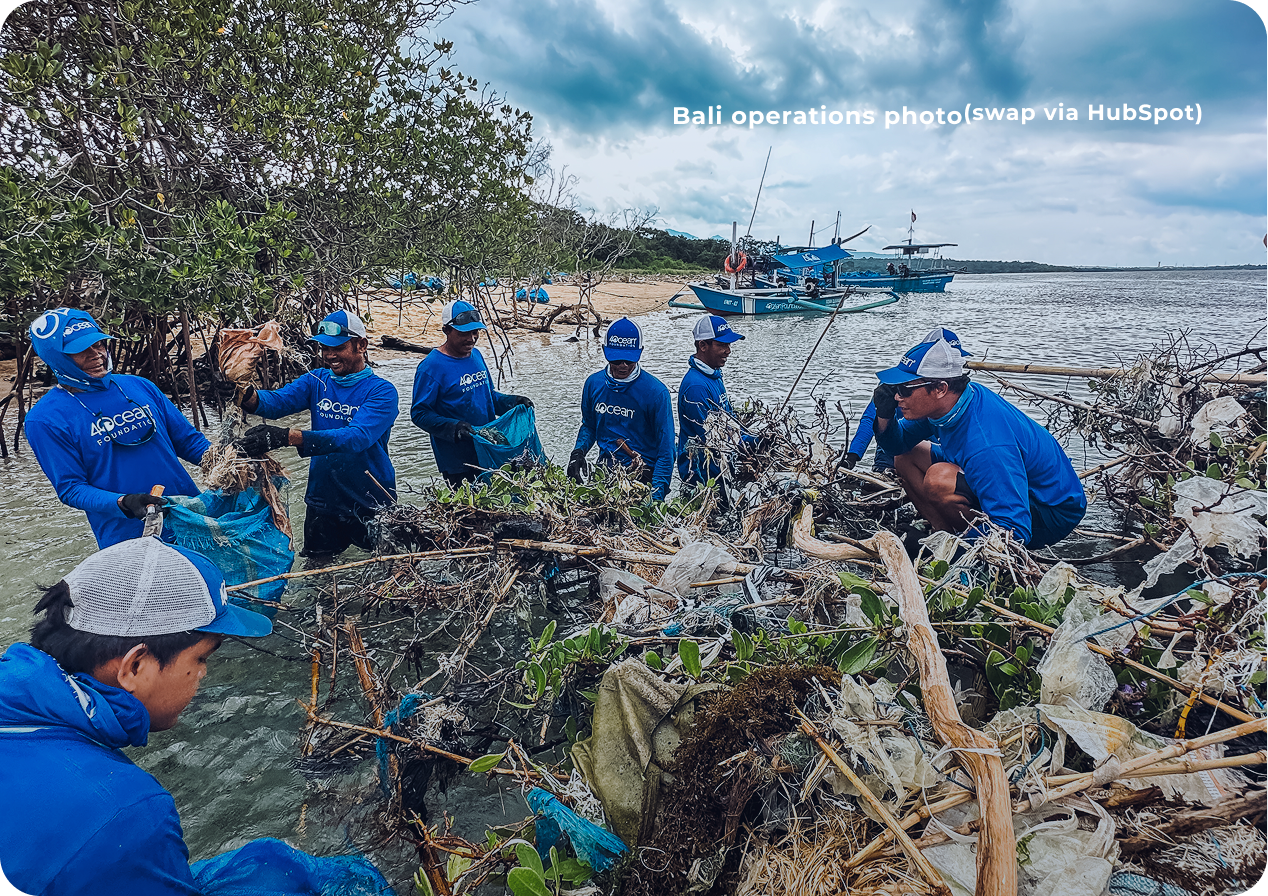
Bali is also the spine of our visual content — the boats on the water, the crews at work, the haul coming back to shore. That content powers the education and behavior change campaigns that make up our second owned pillar. Without Bali, we would have no proof to show and no story to tell.
Governance & verification
Every pound we report traces to a location.
Transparency is not a communications strategy for us — it is an operating principle. We have removed more than six million pounds of plastic from the ocean and completed our first financial and governance audit, led by BDO.
-

GPS-logged cleanups
Every cleanup is GPS logged and tagged to the ecosystem it took place in, so pounds reported trace to a location and a habitat — not just an annual total.
-

BDO independent audit
Financial statements independently audited by BDO annually. We have asked BDO to propose a standalone audit of our monthly and annual impact numbers.
-

Full traceability
Collected plastic is separated into recyclables and non-recyclables, with recovery certificates ensuring end-of-life accountability for every pound.
-

Monthly reporting
Verified impact data published monthly — pounds removed, cleanups completed, crew hours deployed — so supporters see results as they happen.