Breaking the Plastic Wave
Landmark study projecting plastic pollution to 280M metric tons by 2040 and outlining intervention strategies that can bend the curve.
The facts, research, and resources behind our work — updated as the science evolves.
Scale of the Crisis
The global plastic pollution problem is not on its way to being solved. It is getting worse, faster. Independent research from the Pew Charitable Trusts projects that the volume of plastic entering the environment will more than double between now and 2040 — from approximately 130 million metric tons annually to 280 million — under a business-as-usual scenario.
No cleanup program at any scale outruns that tide alone. Which is why our model pairs verified, GPS-logged cleanup operations with education, behavior change, and connections to the policy and systems-change work that happens upstream.
Cleanup is the proof. Education is the multiplier. Policy is the endgame.
Source: Pew Charitable Trusts, Breaking the Plastic Wave (2025)
130M
metric tons entering the environment annually, as of 2025
280
projected by 2040 — more than double — under business-as-usual
Topic 02 · How Plastic Enters the Ocean
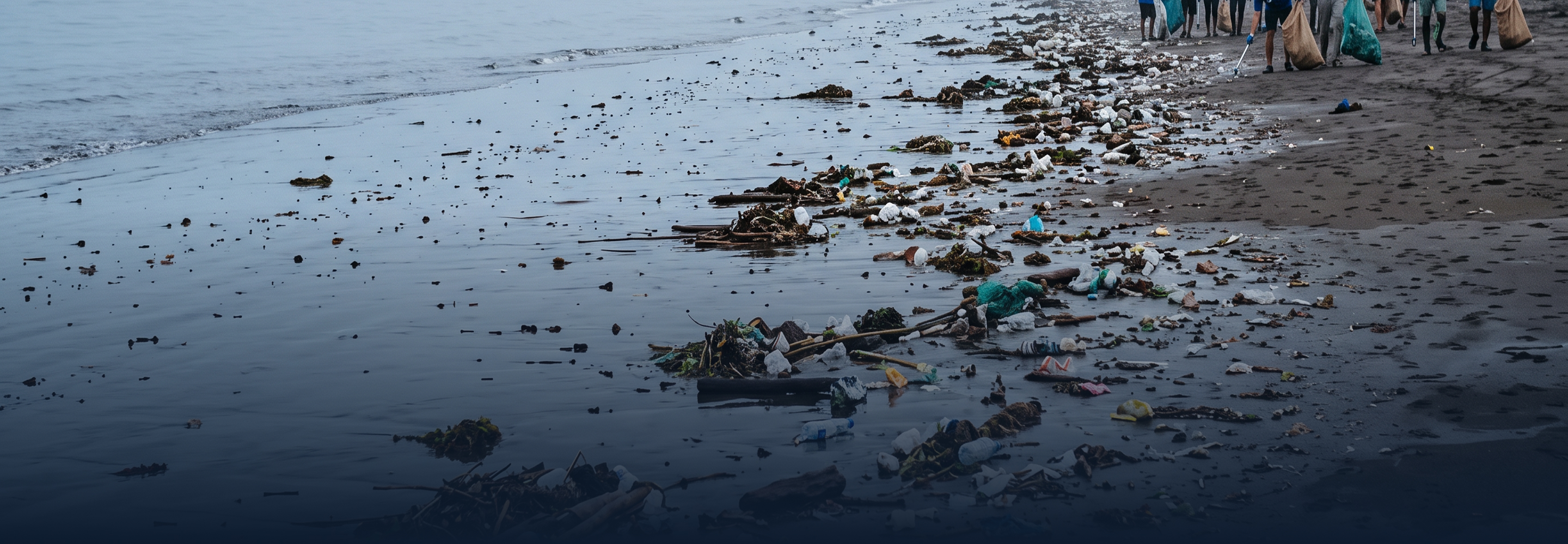
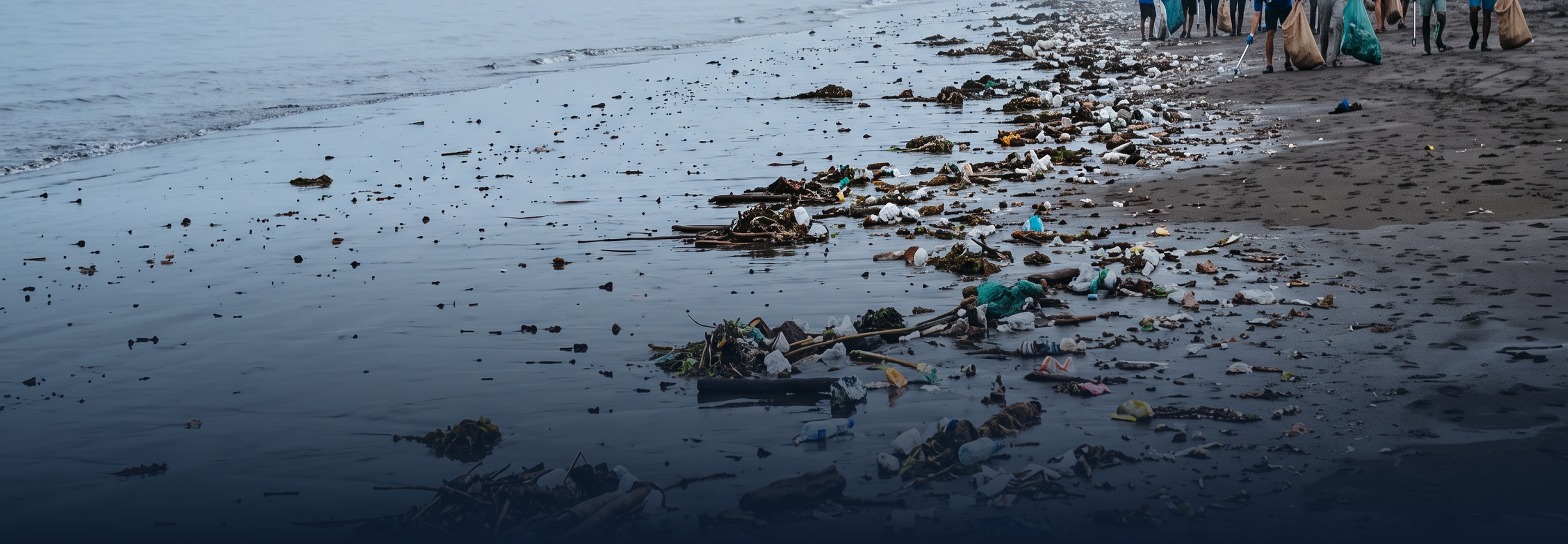
The vast majority of ocean plastic originates on land and reaches the sea through a predictable pathway: rain and flooding wash it into drainage systems and rivers, which carry it to coastal outflows and into open water.
This is why river interception is one of the most efficient interventions available. Our boom network in Jembrana and Denpasar targets exactly these outflow points — the narrow windows where river-borne plastic can still be caught in bulk before it disperses and fragments.
Plastic produced and used on land — packaging, single-use items, fishing gear
Rain and flooding carry it into drains and rivers
Rivers carry it to the coast — our booms intercept it here
Ocean currents distribute it globally — one country's waste, every ocean's problem
Topic 03 · Microplastics & Human Health
Plastic left in the ocean doesn't stay whole. UV exposure, wave action, and physical abrasion break it down into progressively smaller fragments — eventually reaching a scale small enough to enter the water column, the food chain, and the human body.
Peer-reviewed research has now detected microplastics in human blood, lung tissue, placenta, and breast milk. Every piece of plastic we remove from a river or coastline is one less fragment that can ever become microplastic.
This isn't just an ocean problem. It's a human health problem.
Sources: Journal of Environmental Management (2025) · Nature Medicine (2024)
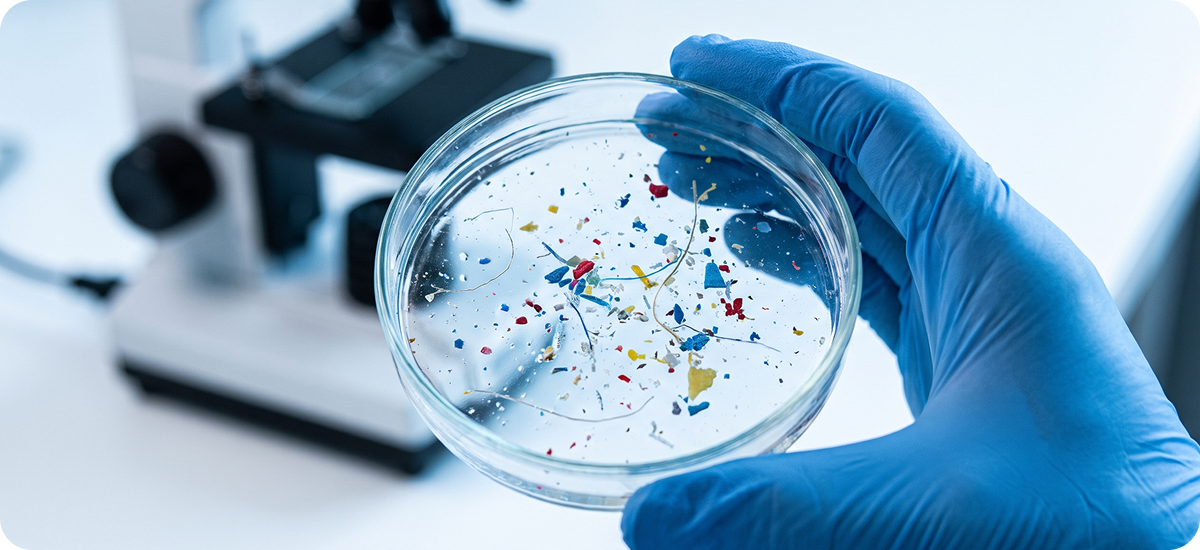
First peer-reviewed study to detect and quantify microplastic particles in human blood samples from healthy adult donors.
Detection of microplastic particles in surgically removed human lung tissue, including deep lung samples.
Topic 04 · The Coral Triangle
The Coral Triangle spans six nations and 6 million km² of ocean. It is home to 76% of the world's known coral species and 37% of reef fish species, supporting the food security and livelihoods of more than 100 million people.
Bali sits at its centre — and along the Indonesian Throughflow, which connects the Pacific and Indian Oceans. Plastic that enters the water here disperses across an entire ocean basin. Cleaning up in the Coral Triangle is upstream work for the whole planet.
76%
of coral species
Source: WWF
37%
of reef fish
Source: WWF
6M km²
marine region
Source: WWF
100m+
livelihoods supported
Source: WWF
The definitive overview of the Coral Triangle's biodiversity value — coral species, reef fish, and the human populations that depend on these ecosystems.
Nine-country field research with Indonesia as a key case study — validating that plastic leakage is a primary driver of biodiversity loss in the Coral Triangle.
Get involved
Every pound we remove is verified, GPS-logged, and publicly reported. Join us in doing something about it.